


Elephant Health
Their spines cannot support the weight of people. Carrying people on their backs all day can lead to permanent spinal injuries. Imagine carrying a 50 pound backpack for nine hours a day, every day on your back. Even after an hour or so, you can feel the weight of the backpack. Imagine what it would feel like to have it on your back nearly all of your waking hours. And, the long-term damage that can come from having it on your back all day. It’s the same with elephants.
Elephant in mahout
Not only is there the issue of their spines not being made to carry people, but the actual implications from having the chair or Howdah attached to their backs. The contraption rubs on the back, causing blisters that can get infected. In addition, there’s the wear and tear on the elephant’s feet. Long-term trekking can cause foot infections and injuries.
Social Interaction
Elephants are a lot like humans. They socialize, have families and friends, feel pain, sorrow, happiness and more. When they are at trekking camps, they are often times not with other elephants. They live their lives essentially in solitary confinement at some camps.

This causes spine injury
Living Conditions
Babies are chained to mothers during treks, which can cause the little ones harm. When they are chained to their moms on a trek, they must keep pace with the mom as she walks, which is often times difficult. In addition, they cannot stop and rest or nurse. They must continue trekking. Often times to continue trekking, the guide (or mahout) will prod them with a bullhook to keep them moving. The bullhook, which elephants remember from their torture during the phajaan, can immediately strike fear in them. For the small few, this fear can trigger a reaction that can not only hurt the elephants, but also the riders on them.

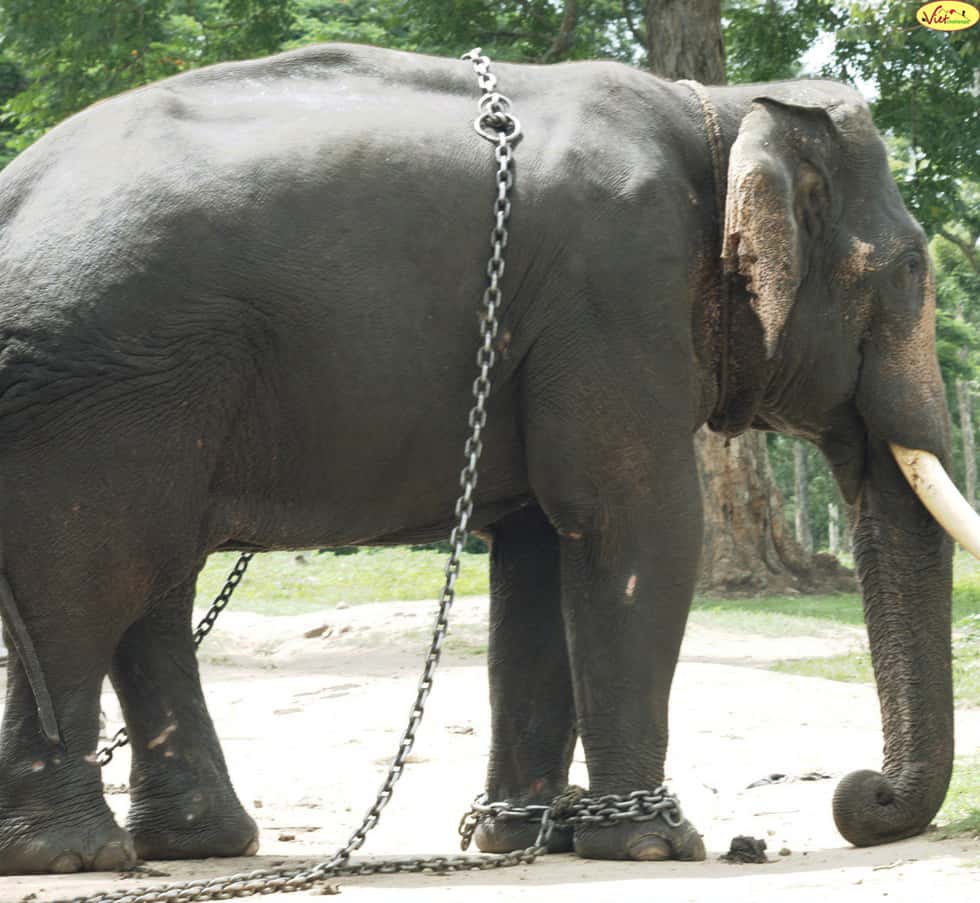
Chains and Bullhook
Aside from the actual trek, the camps chain these elephants when they are not working. They don’t feed them enough, or give them enough water. Many people report visiting trekking camps and seeing elephants swaying, pacing and bobbing their heads – signs of serious psychological stress.
Don't believe everything you hear ...
A good rule to remember is that if a tourist outfit offers anything other than getting to spend time with elephants, it is not friendly to them. Any outfit that offers riding, circuses or paintings means they have undergone horrific abuse in order to get them to where they are. Remember, all of these elephants have suffered through the abusive and torturous crush. And while some are more friendly than others, and don’t employ the use of bullhooks, the sheer fact that the elephants are trekking means they are being harmed.

Are the elephants smiling
If you’re headed to Asia and riding an elephant is on your bucket list, you don’t have to scratch it off. But, I would encourage you to educate yourself on the issues and be selective in where you chose to take part in elephant tourism activities. Do your research and please visit places where your tourism dollars directly benefit not only the rescued elephants there but are also important in the much larger picture of elephant conservation.
Don’t buy ivory products. The illegal poaching of male elephants (only males grow tusks in the Asian elephant population) for the illegal ivory trade is still a huge problem and threat to the survival of Asian elephants. So as tempting as it might be to own your very own piece of ivory, find a different souvenir – or better yet, experience – to spend your money on.


