


Wild camping in the pine forests of the Central Highlands, which spread in all directions over the mountains around Dalat, is one of my most memorable travel experiences in this part of Vietnam. As much as I like the city of Dalat, it’s the surrounding landscape that most appeals to me whenever I make the journey up to this area of the Central Highlands: purple mountains cloaked in pine forests stretching into the misty distance; the smell of wood smoke and coffee blossom scenting the cool air; the stillness and silence of an alpine landscape most people wouldn’t normally associate with tropical Vietnam. For me, by far the most rewarding way to experience this region is by camping independently in the pine forests north of Dalat. On this page, I’ve compiled an introductory guide to how to camp in Dalat.
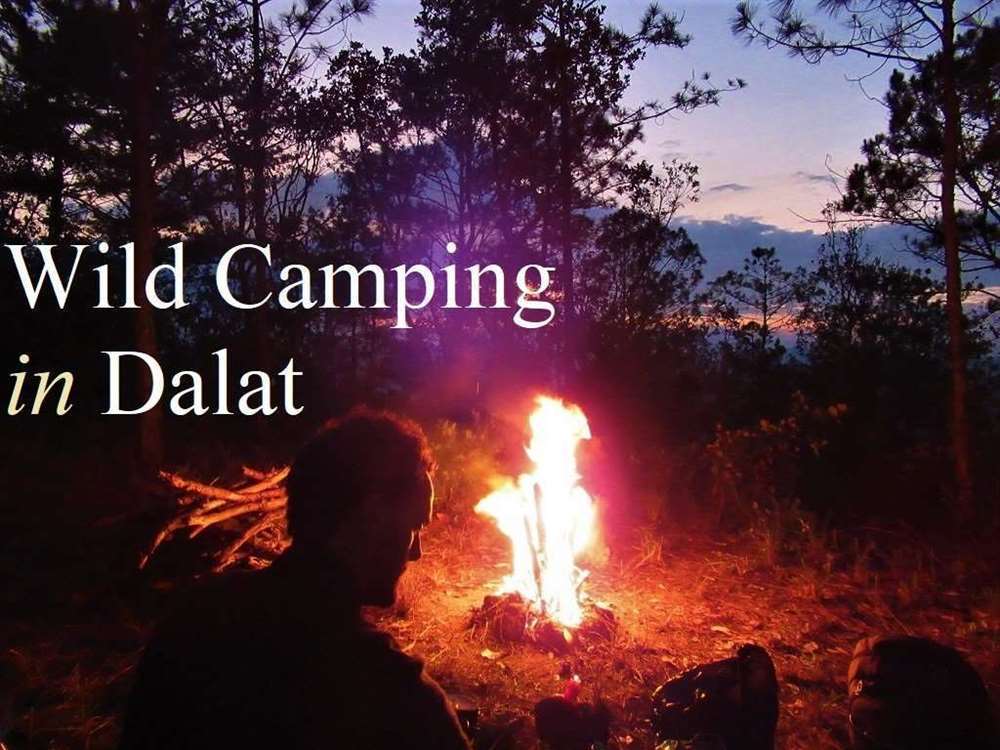
GUIDE: CAMPING IN DALAT
Wild camping in the pine forests around Dalat is extremely good fun. In fact, if you do it right, camping in Dalat may turn out to be one the best experiences of your entire Vietnam trip. However, independent wild camping requires preparation, common sense and responsible behaviour. Below I’ve covered several topics, such as where to camp, what equipment to bring, weather, and safety.
CAMPING MAP:
Camping in the Pine Forests North of Dalat
- Blue lines: paved roads
- Red lines: dirt roads & tracks
- Green zone: pine forests & potential campsites
Why Camp in Dalat?
For me, camping in the pine forests is unquestionably the best travel experience you can have when visiting the Dalat region.
The first time I came to Dalat, in 2005, I remember my excitement building on the bus journey as the road climbed higher through jungle and mountains, only to be disappointed on arrival, when I realized that very little of this landscape is actually visible from the city itself. What was the point, I wondered, in travelling all the way up into the mountains if, once you arrived, there wasn’t really much sensation of being there? Of course, most visitors to Dalat go on excursions to waterfall, lakes, coffee farms, and valleys within easy reach of the city. However, because Dalat is such a popular destination – for domestic and foreign tourists alike – these nearby scenic sites are often (but not always) heavily commercialized, busy and underwhelming. By far the best way to really immerse yourself in the natural setting of this area, is to rent some wheels, ride a fairly short way north out of the city, find a spot in the pine forests, and camp.

Ride out of Dalat city & into the mountains & forests
Whether camping alone or with friends, chances are that sleeping out in the forests north of Dalat will be a night (or more) that you’ll remember. Indeed, I’ve been traveling around Vietnam for over a decade, and my camping trips to Dalat are among my most memorable travel experiences. If you find a good campsite by late morning, you can spend the day in the dappled sunlight beneath the canopy of giant pine trees, watching the colours change over the mountains, chatting, reading, snacking, playing the guitar, and singing until sunset. I usually make a fire at dusk as the sun is disappearing behind the ridges to the west. When darkness falls it’s often a surprise to find that mine is not the only fire in these forests: other flickering orange lights may appear in the landscape around – a reminder that some people in the Central Highlands still live semi-nomadic lives.
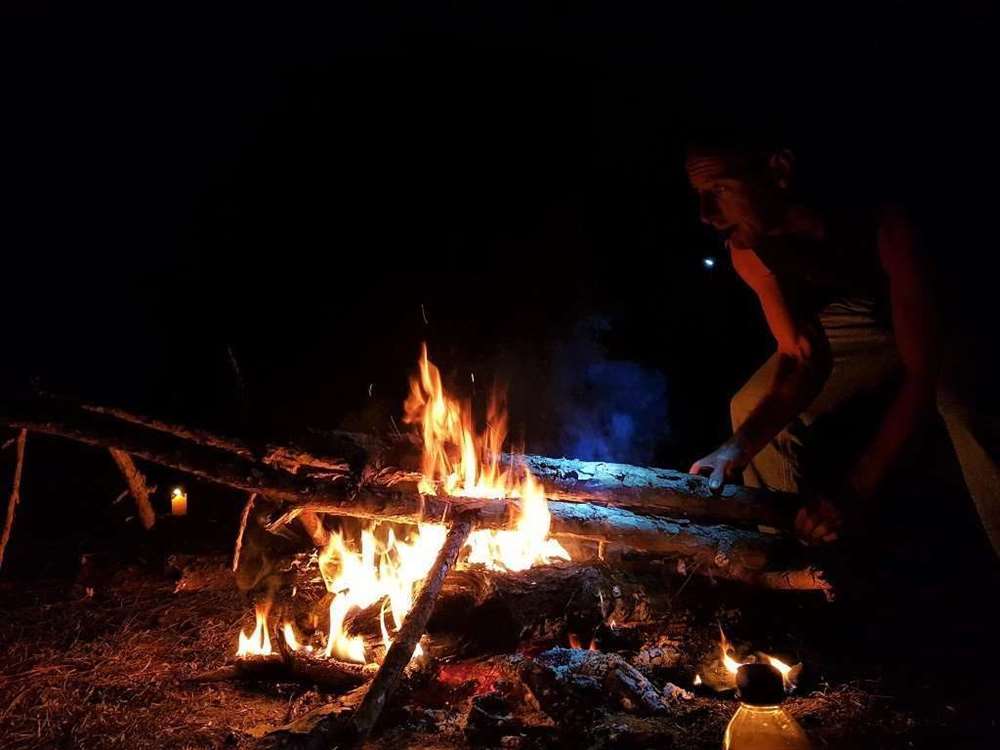
When the night gets cold I lie by the fire, watching the stars and thinking about the animals that once inhabited these forests: travel writers in the 1950s wrote about wild tigers and elephants being a daily concern for locals, who avoided walking from house to house in Dalat at night for fear of animal attack. Today, however, the only large wildlife you’re likely to encounter are cattle (which can still be a pretty scary sight in the middle of the night). The things that stay with me the most from my camping trips in Dalat are the sound of the wind through the pine trees at night – a sound that is at once haunting and comforting – and the crisp, cold dawns, with the grey mist hanging in the valleys, lit red from below by the rising sun. But, more than anything else, it’s all the good times I’ve spent out in this landscape, in the fresh, open-air with my close friends, staring up at the stars and drinking rice wine together, talking, laughing, and falling asleep on the mountainside as the embers of our campfire glow in the darkness
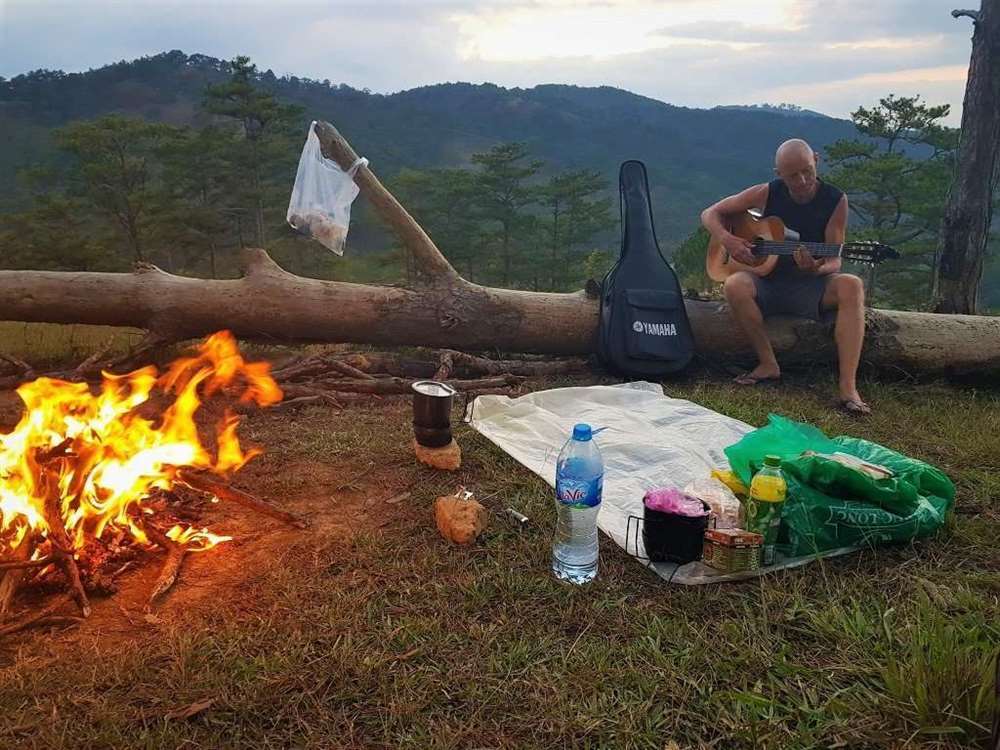
Over the last 10 years I’ve camped in Dalat dozens of times; sometimes with friends, sometimes alone
Where to Camp & How to Choose a Campsite?
Finding a good campsite is part of the fun of camping in the forests north of Dalat. Take your time (try to leave Dalat in the morning to give yourself several hours to ride around before choosing a suitable site), and think carefully about what it is you’re looking for. To get to the pine forests you’ll need a motorbike or bicycle which, if you don’t have one already, you can rent in Dalat. Ride due northwest out of the city, heading towards Hồ Suối Vàng (Golden Spring Lake), a popular attraction and picnic spot for domestic tourists. It’s a relatively short and pleasant ride, taking around 30-45 minutes on good roads (see my map). Before reaching Ho Suoi Vang, the road splits: here you can bear right for the lake and the Pine The Road (DT722), which is an excellent asphalt road stretching for another 40 kilometres due north before dead-ending near the village of Dung K'nor, but en route there are lots of potential campsites in the forests and hills, accessed via dirt roads leading off the main road (see my map); or you can bear left towards Pang Tieng and Da Nghit villages, both of which are at the beginning of amazing networks of dỉt roads leading into the mountains and through the pine forests after crossing the river to the west. Either of these options should reveal countless opportunities for campsites.

The pine forests north of Dalat are easily accessible & perfect for camping
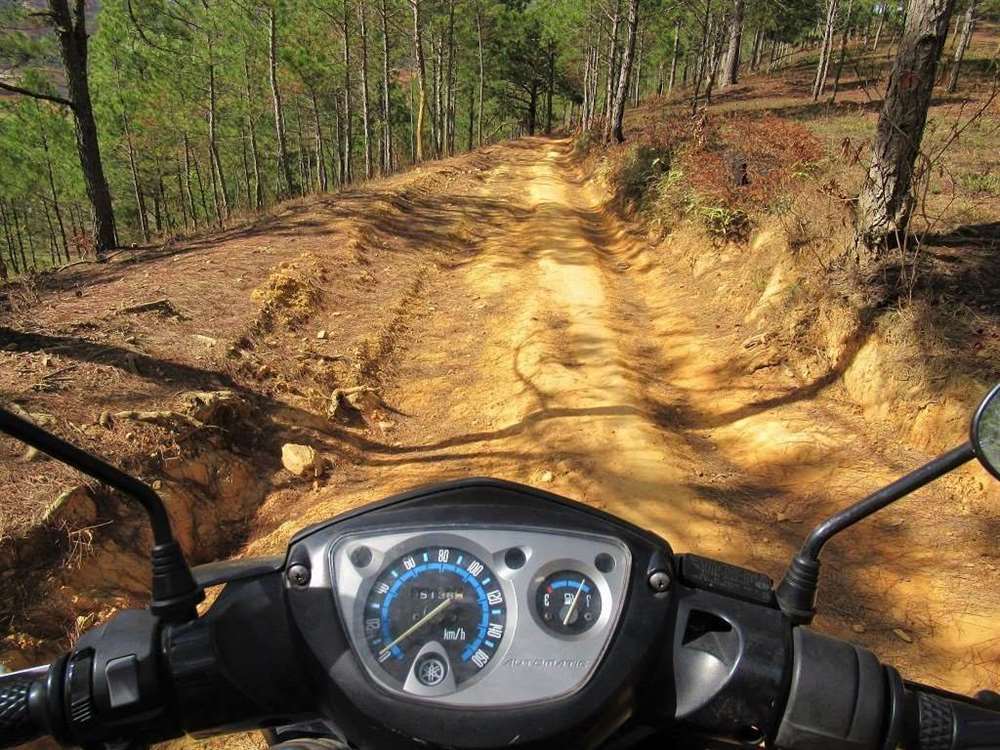
A large network of dirt tracks lead off the main roads & deep into the pine forests & mountains
Of course, the further off the main road you go, and the further down the dirt roads you go, the more isolated, peaceful and beautiful the potential campsites become. The last time I camped in this area, I spent days riding more than a hundred kilometres of dirt tracks through the pines; ridge after ridge, stretching into the distance. However, if conditions are wet, these dirt tracks can be extremely muddy, slippery and treacherous: only go when the weather is dry, and even then remember to ride very carefully
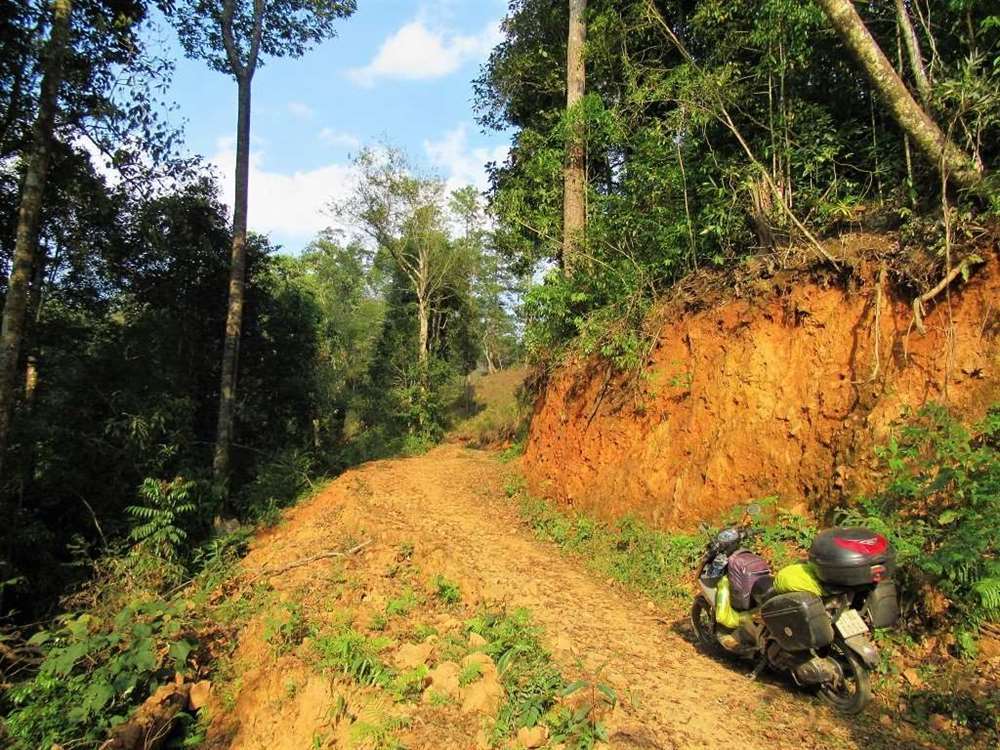
The further you go, the more isolated, peaceful & beautiful it becomes
Ideally, I like to find my campsite by late morning so that I can pitch my tent, collect fire wood and organize my things, then enjoy the rest of the day, whether by myself or with my friends. The pine forests here are perfect for camping: the carpet of fallen pine needles is soft to sit and lie on, the pine trees offer shade from the sunshine during the day and shelter from the cold, wind and rain during the night, and there’s plenty of dead wood lying around for making a small fire (although obviously you need to be extremely careful, especially in the dry season, because pine is very flammable). The idea is to leave your campsite exactly as you found it: take a before and after photo if you like; they should look the same. That means taking you trash away with you and making sure you extinguish your fire properly before you leave. Use your common sense and don’t leave anything to chance. Wild camping requires you to be sensible, careful and responsible, otherwise things can go badly wrong.
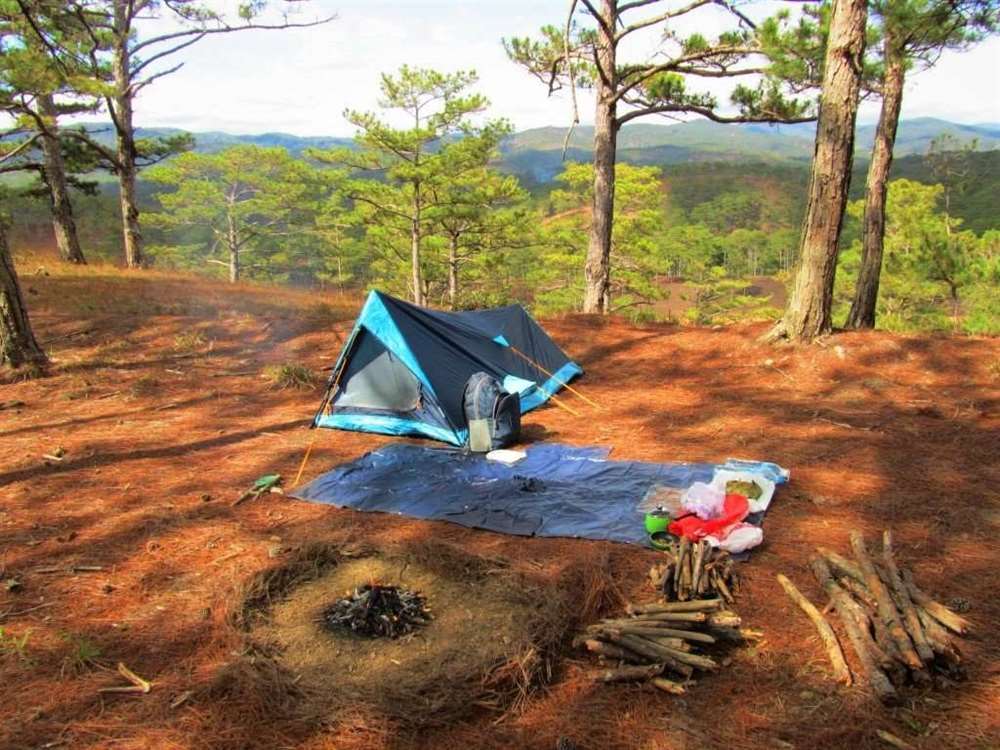
Spend some time trying to find the ‘perfect’ campsite & think carefully before deciding on one
Choose your campsite carefully. I can get a little obsessed with finding the ‘perfect’ site: a grassy patch of land on a mountaintop surrounded be a copse of beautiful pines, with panoramic views over the endless forests and ridges, and no one about. And, indeed, it is possible to find just a site as this, if you’re willing to spend the time and effort searching for it. Generally, however, a good campsite in this particular region is one with a clear path to the main road (in case you need to make a quick exit because of bad weather or any other unforeseen circumstance during the night), but preferably not in sight of it. This is because you don’t want to attract the curiosity of any passersby. As a general rule, try not to draw attention to yourself: wild camping is still quite unusual in Vietnam, so anyone who sees a traveller setting up their tent in the middle of the woods will naturally be curious, or even, in some cases, suspicious. Try to make sure no one sees you riding into the forests from the main road, and make sure you choose a campsite that is both in a commanding position – where you can view your immediate surrounds – but also relatively hidden from view.

A good campsite should be in a commanding position but also relatively hidden from view
Bear in mind that, at this altitude (over 1,500m), the nights can be surprisingly cold. Don’t pitch your tent in a position exposed to the prevailing wind, but also remember that, if it rains during the night, you don’t want to be at the bottom of a slope where all the runoff rainwater will flood your campsite. Shade should be another consideration, especially for the daytime, because when the sun is up and the night’s chill has gone, the days can get very hot, very quickly. Most importantly, in my opinion, is to find a campsite with a view: one of the most enchanting and memorable parts of camping in these pine forests is watching the sunset and the sunrise.
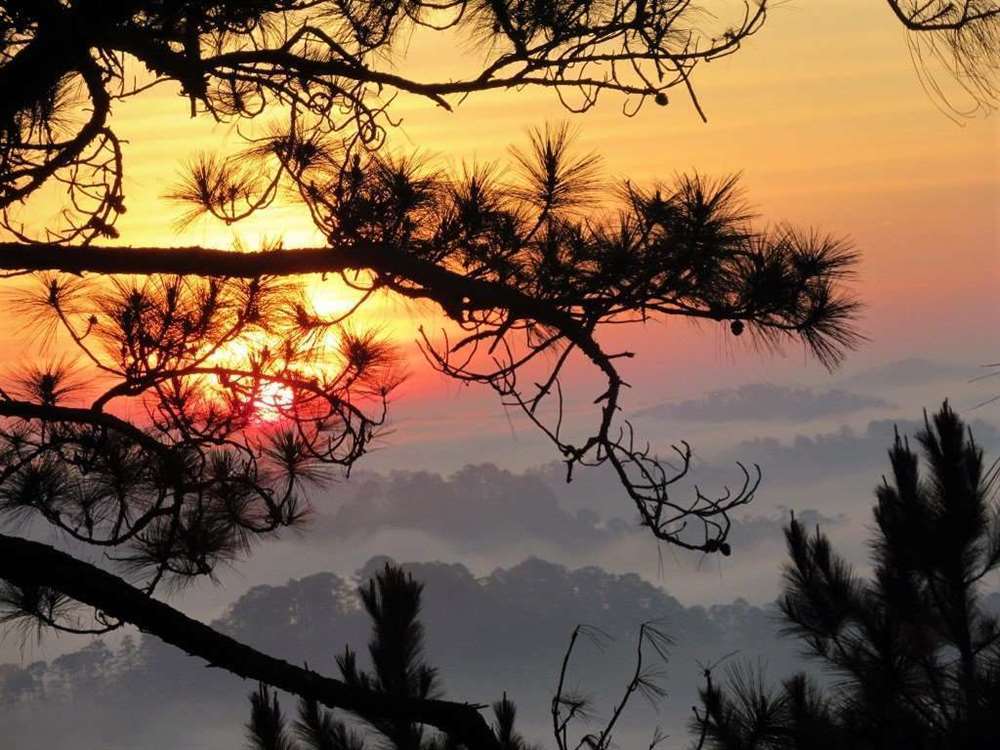
Above all, make sure you choose a campsite with a fabulous view from your tent
What Equipment do I Need & Where to Get it?
Make sure you come prepared. This is ‘wild camping’, so it’s up to you to take responsibility for yourself and do everything you can to make sure the experience goes smoothly. Firstly, you’ll need a tent. I bought mine years ago in a camping store in Covent Garden, London. But there are now quite a few camping shops in Saigon (Ho Chi Minh City) and most other major cities in Vietnam that sell decent tents. Camping is becoming more and more popular in Vietnam, especially among young independent travelers, so there are more and more shops selling camping equipment. In Saigon, Danang and Hanoi, Fan Fan is a good place to start. But you can find other camping stores by googling and asking around wherever you are. In Vietnamese useful phrases are đồ cắm trại (camping equipment), đồ dã ngoại (outdoor gear), cái lều (tent). In some popular tourist destinations, such as Dalat, it should also be possible to find somewhere to rent a tent and other camping equipment. Although I can’t recommend any particular places in Dalat to rent or buy camping gear, it shouldn’t take too much digging to be able to find out about it.

Because this is ‘wild’ camping, you’ll need your own tent & other camping equipment
What kind of tent you choose is up to you. But standard dome tents with a fly sheet should be fine. You want something light weight and compact so that it’s easy to carry on your bike. But you also need a tent with a decent fly sheet to keep the cold out at night (remember, it does get cold at night) or, if you’re camping between April-October, to keep the rain out. Some people also like camping hammocks; I don’t especially like them, but they’re available from stores in Vietnam if you want.

Tents are available to buy in most large Vietnamese cities & also sometimes for rent
Although technically it’s not absolutely necessary, you should bring a small camp stove (or two) for cooking. (The alternatives being cooking directly over a campfire or bringing pre-cooked food with you). [See Food and Drink]. For the camp stove (or campfire), you’ll need a lighter or matches and/or firelighters – you can buy the latter in stores: ask for cồn khô. Other necessities include a torch (flashlight), warm clothing and a sleeping bag or thick blanket (again, it can get cold at night). Having something to sleep on is also a good idea: the ground can be cold, hard and uneven, so having something soft and insulating between you and it makes the difference between a comfortable night and a sleepless one. Eating utensils, such as spoons, chopsticks, and any tech gear, such as cell phones, power banks, are good to remember too.

Bring a camp stove & utensils & make sure you have enough clothes & bedding to stay warm at night
Most importantly, bring something to put your rubbish in. Sadly, many domestic travellers neglect to do this: set an example by making sure you leave your campsite exactly as you found it. For peace of mind, it’s good to have a lock or chain for your bike so that you can secure the wheels and leave it near your tent during the night (see Safety). Other little things which I’ve found useful over the years are socks (great for wearing outside the tent on the forest floor), wet wipes (great for cleaning your skin and cooking utensils), candles (very comforting at night, especially if you don’t want to make a campfire), mosquito coil (long-burning and effective), thermos bottles (great for storing hot water so that you don’t have to reheat heat it every time you want a coffee or noodles), a portable musical instrument, such as a guitar or ukulele, and a decent knife.
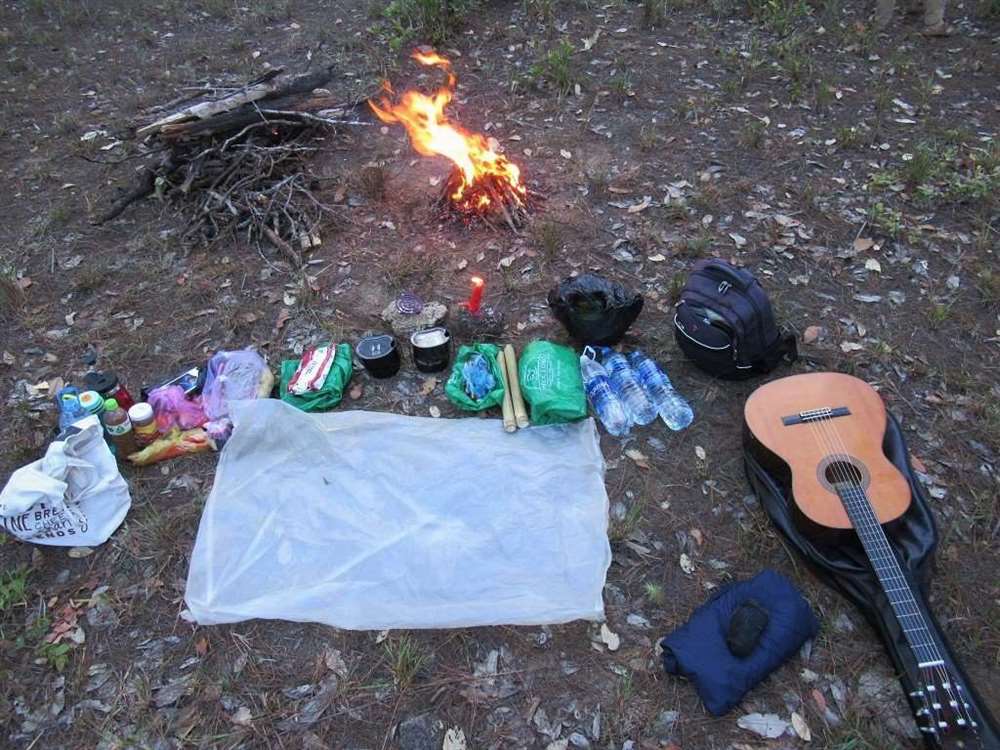
Little extras, such as candles, a thermos, mosquito coils etc make all the difference
What About Food, Drink & Toilets?
Obviously, there are lots of shops in Dalat city where you can get all necessary food and drink supplies from. But there are also a few local shops, restaurants and villages dotted around the pine forests north of Dalat. However, once you’re in the pine forests proper, there’s hardly anything at all, save for a handful of wooden cabins belonging to local farmers. If you intend to camp for a night or more, the most important thing to bring is water. You can buy 1.5 litre bottles of drinking water pretty much anywhere in Vietnam. But, for camping, a better idea is to find a shop selling big 5-6 litre bottles of water (look around Dalat and you’ll find them fairly easily). Strap a 5-6 litre bottle on the back of your bike in addition to carrying a couple of 1.5 litre bottles. This should be enough water for 2 people camping for one day/night, or even two nights if you use it sparingly. It’s surprising how much water you use: making coffee or tea, cleaning utensils, making noodles, brushing your teeth, and of course drinking. What’s more, the pine forests are quite dry: there aren’t many rivers and streams running through them, although it is possible to find a few waterways if you do some exploring.

Supplies can be bought in Dalat & several villages: water is the most important thing to bring
As for other food and drink supplies, that will depend on whether or not you have a camping stove or cooking pot (which I highly recommend you do). If so, you can be as creative as you like with your camping food. My camping staples are usually packs of instant noodles, cans of tuna, nuts, fruit, chocolate, tea and coffee. You can also bring along garnishes, such as herbs (there are dozens of varieties available in Vietnamese markets and they’re very cheap) and a small bottle of soy sauce (nước tương), fish sauce (nước mắm) or five spice (ngũ vị) to liven things up. Tea and coffee are both grown locally and can be bought in Dalat. I carry a portable coffee maker (either a V60 dripper or AeroPress) so that I can brew good, real cups of coffee while camping, rather than instant coffee
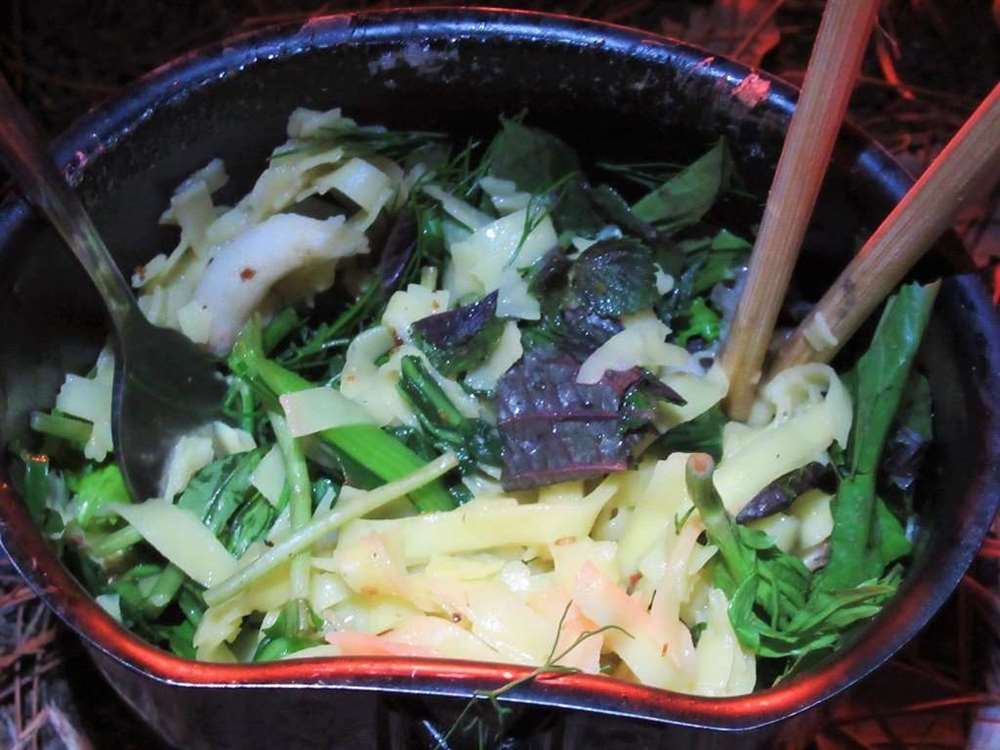
With a bit of thought, camping food can be quite appetizing: this is instant noodles with fresh herbs
A special highlands treat is cơm lam – sticky rice cooked inside a length of bamboo. You can find this in several roadside eateries on your way to the pine forests. You can buy cơm lam cooked or uncooked – if you buy it uncooked it’s a lot of fun heating it up on the campfire at night. Another local speciality is delicious whole, spit-roasted chicken (gà nướng), which you could buy to take away. (For cơm lam and gà nướng I recommend stopping by quám Thung Lũng Xanh for excellent quality.) Dalat is also famous for its strawberries, which you can buy from several roadside gardens, such as Mỹ Tiên strawberry Farm.

Local delicacies make excellent camping food: bamboo sticky rice (cơm lam) & roast chicken (gà nướng)
Lastly, bring a bottle of something to really drink. Beer, wine and spirits are all available in Dalat. But I prefer to get a bottle of the local mountain brew to keep me warm and jolly at night under the stars. Rice wine (rượu) is very popular in the highlands. In particular, there’s a variety made from the fruit of the sim plant (rose myrtle) which grows up here in the highlands. The liquor is flowery, fruity and strong. Ask around or look out for signs by the roadside saying rượu sim – again, Quán Thung Lũng Xanh sells its own brew to take away.
.jpg)
Hot, local coffee on a cold highlands morning. Another local drink to try is rose myrtle liquor (rượu sim)
When you put all this together it can turn into some very pleasant dining experiences. For example, my friends and I have enjoyed piping hot noodles with chunks of tuna, crunchy peanuts, fresh, aromatic herbs and spicy sauce on cold, dark nights in the forests; or shots of rose myrtle liquor around a fire while dipping fresh strawberries into a pot of melted chocolate; or greeting the misty, rose-coloured dawn from inside our tent with a hot cup of fresh, locally grown, arabica coffee.
As for toilets, do as the animals do and go in the forests: there are trees, leaves, ditches and dykes. But do it sensibly: dig a hole and cover it up when you’re done.

With a campfire, stove & a bit of imagination, food & drink while camping can be appetizing & satisfying
Is it Safe to Camp?
I’ve camped in the pine forests north of Dalat dozens of times over the last 10 years and I’ve never had a bad experience. On one occasion, my friend and I were forced to abandon our campsite in the early evening, because it had rained steadily for five hours and we’d carelessly pitched our tents at the foot of a hill, so the rains ran down and flooded our campsite. I was once disturbed (and terrified) during the night when I heard heavy footsteps approaching my tent and saw two giant shadows moving outside, only to discover that they were a couple of beautiful buffalo. I’ve never been told not to camp and I’ve never had a problem with local authorities: one time, a forestry worker walked by my campsite, I asked his permission to camp, and he said it was fine as long as I did so responsibly. (See also How to choose campsite.) When you go to sleep, make sure you have all your most valuable possessions with you inside the tent, and don’t leave food out during the night. In general, if you come prepared and use your common sense, you should be fine.
*WARNING: It should go without saying that if you make a campfire you need to be extremely careful, especially in the dry season, because pine is very flammable & the forests can be very arid at certain times of year: fire can spread quickly & easily. Be sensible, keep your fire small & under control & don’t take anything for granted.
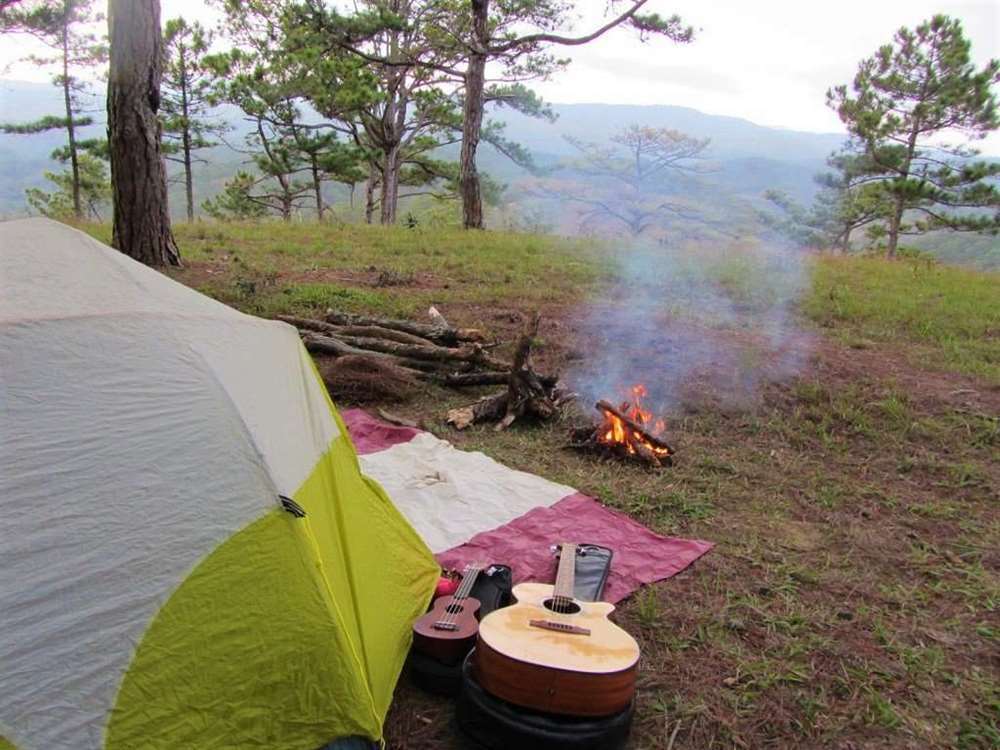
I’ve never had any security issues while camping in the pine forests of Dalat for a decade
Most of the big animals and predators that used to roam these forests – tigers, elephants, bears – are now long gone; hunted, and poached to death. Nonetheless, nighttime can still be a scary, sobering experience: the darkness belongs to animals, not humans. You get a real sense of this as you lie in your tent, listening to the chorus of animals and insects outside in the big, black landscape. Don’t leave food outside your tent at night: clean your utensils, stash your food in a container and tie up your litter in a bag. Snakes and mosquitoes are probably the most dangerous animals you’re likely to encounter, neither of which like fire. Snakes, apparently, don’t like heavy footfall and are unlikely to seek out a place of human activity. (I’ve seen many snakes in Vietnam, but none when I’ve camped.) For mosquitoes, burn a coil throughout the evening and night, and bring bug spray if you need it. (See also equipment.) In the night, there are occasional howlings, animal calls, rustling in the trees and brush, and, sometimes, what sound like gunshots. These could potentially be poachers prowling the forests at night, but I think it’s more likely to be some sort of crop protection device that sounds whenever an animal comes close to a farmer’s field. Other sounds you might hear at night include chainsaws and axes: illegal logging and poaching are big issues in Vietnam.
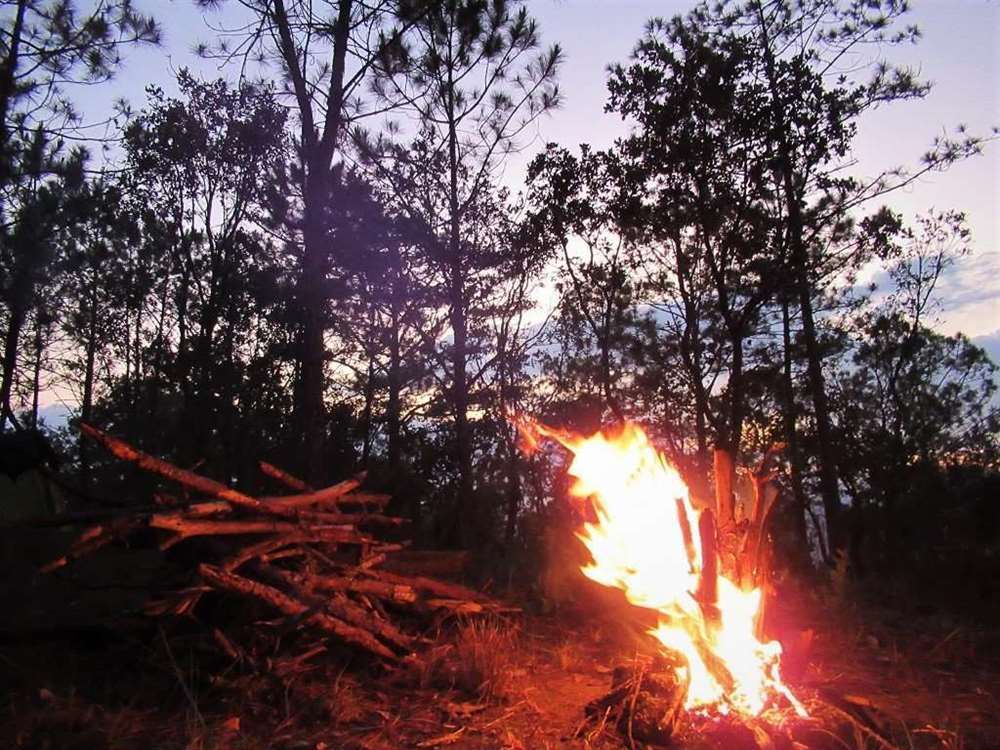
The nights can feel scary, but large predators are long gone from these forests
I lock the wheel of my bike at night (although it would be almost impossible to steal it without being woken). I also leave my bike facing in the direction of ‘escape’, if for some reason I need to make a quick exit during the night (bad weather, perhaps, or some unforeseen circumstance). If you do need to bail out in the middle of the night, Dalat is generally only a 45-60 minute ride away. Other safety precautions include, keeping your bearings, making sure you have a flashlight (and spare batteries), a USB battery pack to charge your phone, and a knife. All of which you should keep easily within your reach while in your tent at night. But mostly it’s about using your common sense and keeping your wits about you.
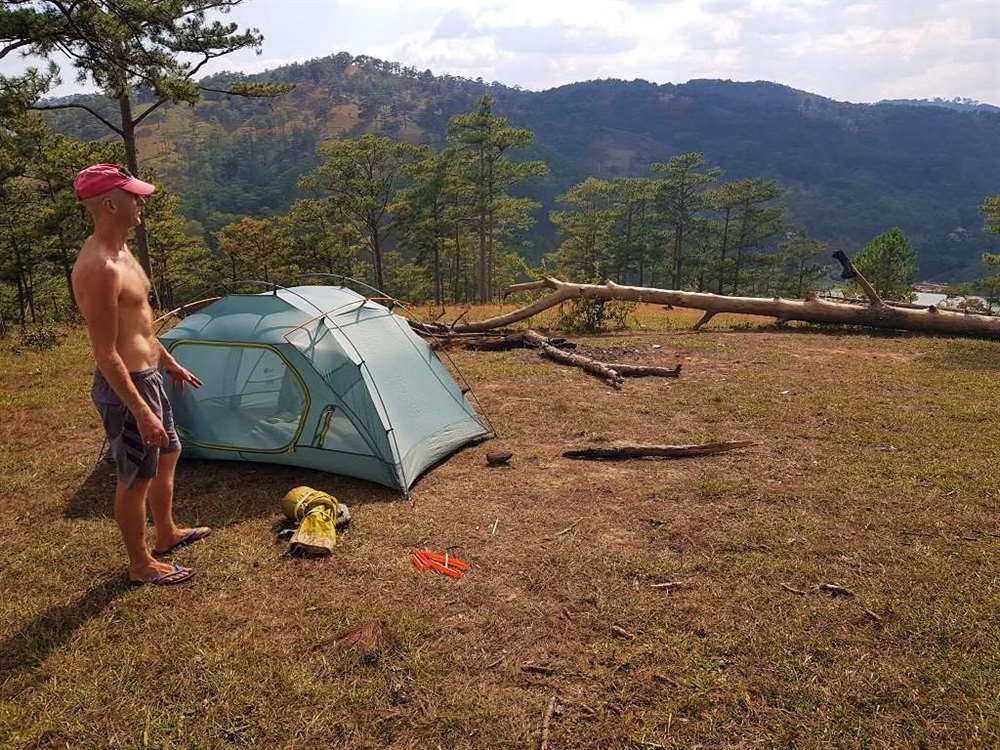
Make sure you have a phone & power bank, a flashlight, a knife & know how to get back to the main road
Disclosure: I never receive payment for anything I write: my content is always free & independent. I’ve written this guide because I want to: I enjoy camping in this area & I want my readers to know about it.
You might be interested in Kayaking and Camping in Dalat.
source: vietnamcoracle.com
Words and photos by: Vietnam Coracle


